
Factory drop testing
One Corner, Three Edges and Six Faces in a Carton Drop Test
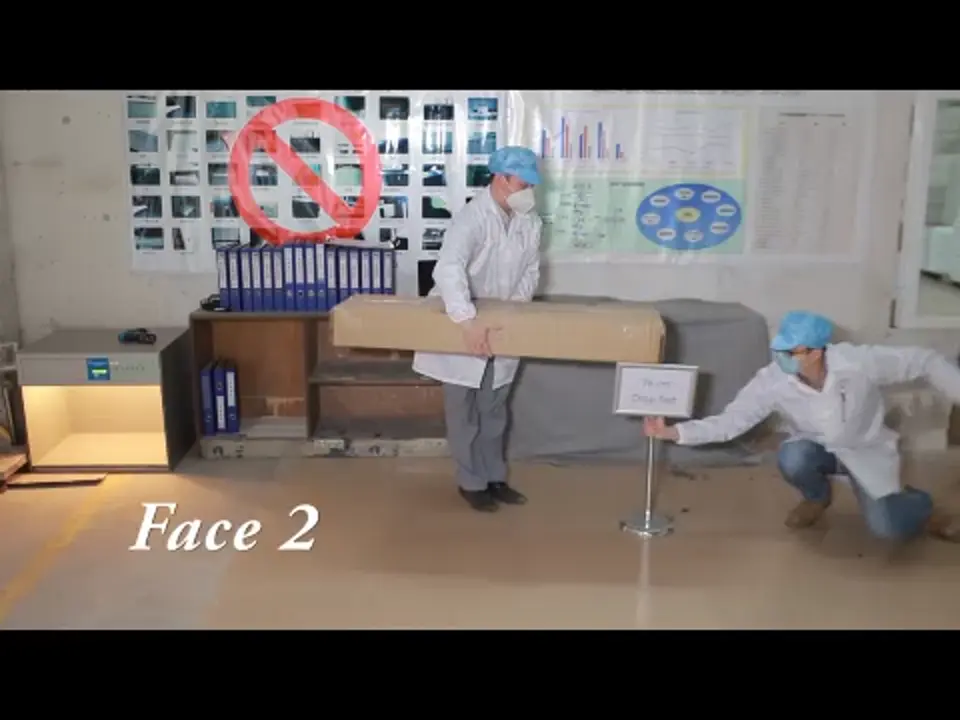
A sequence with one corner, three edges and six faces contains ten impacts on one carton. It is a useful way to understand how orientations are specified. It does not tell you which formal protocol applies, how many cartons to select, or what height to use. The order, selected corner, surface and height must come from the agreed buyer plan or current procedure.
Make the carton easier to identify
As an illustration, label the top and bottom T and B, front and rear F and R, and left and right L and S. Choose the T–F–L corner for this training example. The three edges that meet there are T–F, T–L and F–L. Mark the letters on the actual carton and photograph adjoining sides together so someone in another factory can reproduce the orientation. Use the official numbering convention on formal runs.
| Example steps | First contact | What the buyer records |
|---|---|---|
| 1 | T–F–L corner | Corner ID and the height called for in the plan |
| 2–4 | T–F, T–L and F–L edges | Edge ID and the height for each edge |
| 5–10 | T, B, F, R, L and S faces | Face ID and the height for each face |
If an internal training plan calls for the same height throughout, write that height into each of the ten records. A plan with different heights needs a step-by-step matrix. Do not infer the six face heights from the corner height or a familiar video. An off-angle first contact can change which part of the packaging is stressed. Record it and follow the lab’s instructions for dealing with deviations.
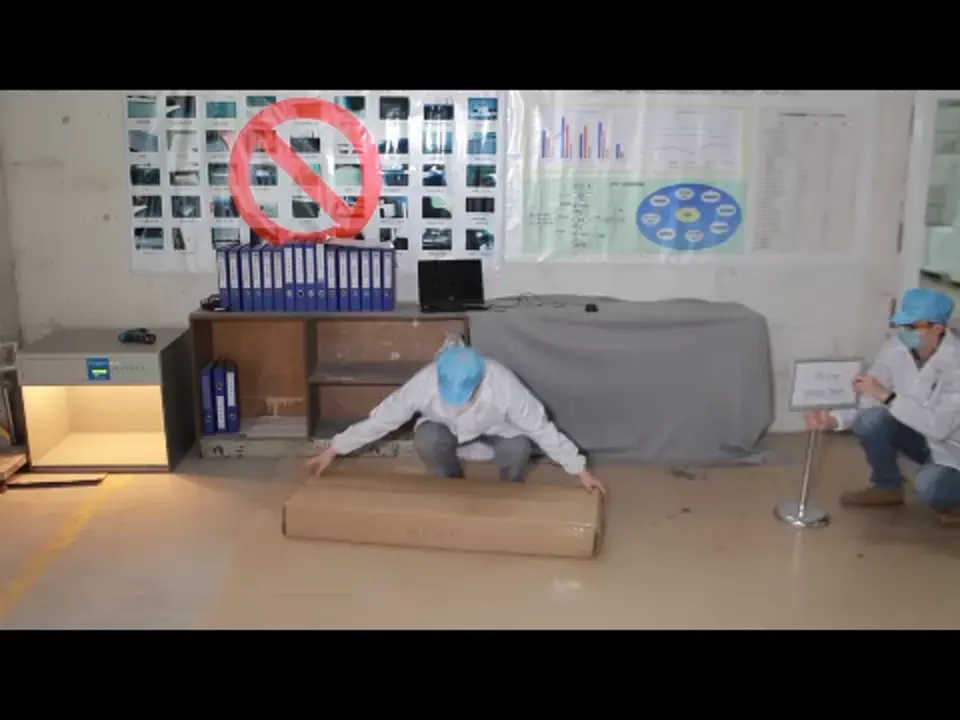
Relate the orientation to a mirror cabinet
A corner hit can deform the end cushion and push it into the mirror frame. A long edge impact can crush the support running alongside the glass or dislodge a loose fitting. A broad face impact may drive the carton panel inward across the mirror plane. Those observations help decide what to photograph after the test. Designate which face is against the glass, where the hardware sits, and where any stand is separated from the cabinet.
A manual demonstration may help your team recognize faces or edges. Use controlled equipment for formal evaluations that need repeatable first contact and measured height. Take a photo of the labeled carton beside the report so the recorded orientation remains intelligible after the package has been opened.